Alternate Heirlooms
MFA Thesis Exhibition
In my body of work, Alternate Heirlooms, I explore the formation of identity through displacement and reckoning with the past. As a descendant of hibakusha, survivors of the atomic bombing of Hiroshima, I have inherited sets of complex lived experiences tied to migration, loss, and trauma. The exhibition consists of video, installation, sculpture, and text works. Line, form, and minimal use of color are dominant in my installation and sculptural works. Through these formal qualities, I create mournful and dominating presences in the main gallery space. In the side rooms of the gallery lay works whose smaller scale creates an intimate quietness. My use of material links to yet subverts Japanese tradition.
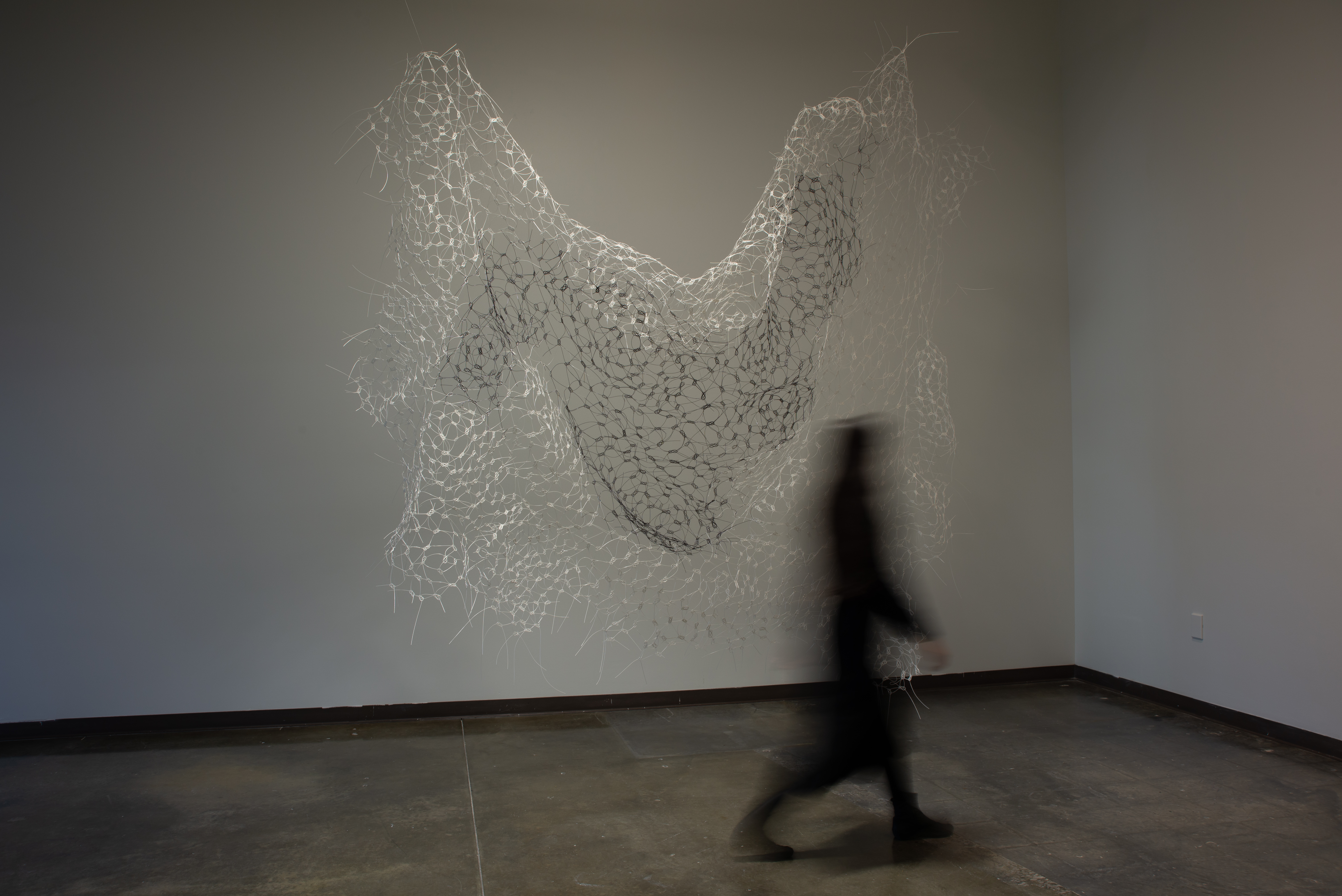


Kuzu, 2024, Mizuhiki cords, 12’ x 12’ x 4’, dimensions variable. Photo credit: Carrie Quinney
My works have the obsessive repetition of a perfectionist. These repetitions are present in many of my works but reach a climax with the Kuzu an installation made of thousands of mizuhiki cords. The process of creating Kuzu consisted of making sections of knotted screens at a time, conforming them to parts of my body as they were made. Then the sections were pieced together over time, creating an ever-growing and shifting work. Kuzu responds to the space in which it is installed with each iteration. Representing the dynamic changes and shifts from displacement and replacement.
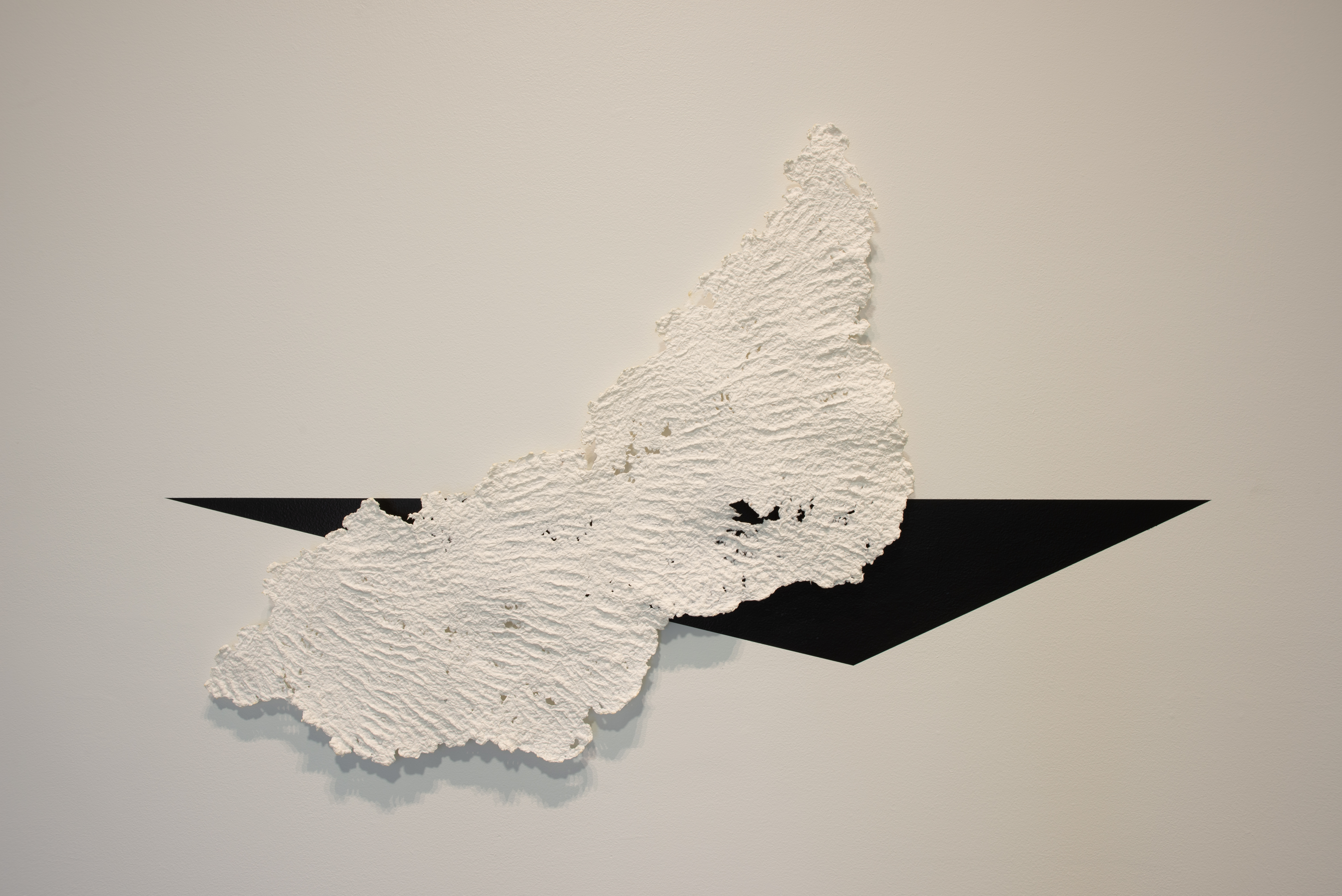

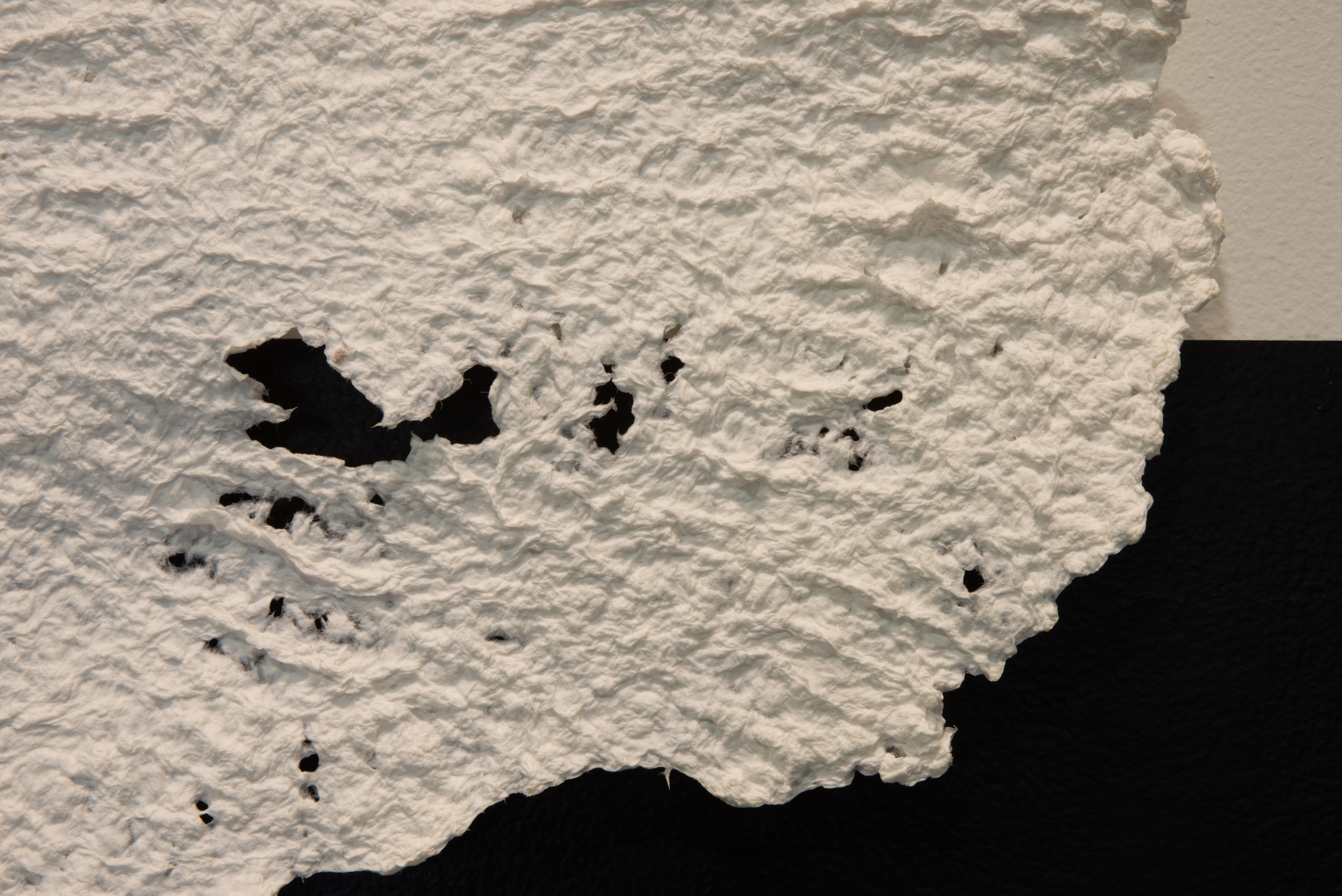

34.39649, 132.45257; 34.05028, -118.24052; 19.93851 -155.16853, 2024, Paper and sumi ink on wall, 40” x 66”. Photo credit: Carrie Quinney
Through the use of traditional Japanese materials, I show an attempt at bridging my exterior and interior identities. My use of these materials becomes an act of translation of my lived and inherited experience as I reverse their traditional expectations. Through the reversal of sumi ink as the substrate and calligraphy paper as a mark, I search for meaning in this inherited identity that is the reverse of expectations. My work 34.39649, 132.45257; 34.05028, -118.24052; 19.93851 -155.16853, speaks of the many reversals and concealments of language throughout my family’s history. The title of the work and paper that has topographic markings prompts the viewer to think of place and migration. Rich velvety sumi ink is painted on the wall creating a void-like triangle, whereas my use of calligraphy paper gently absorbs light. Upon inspection of the title, the viewer can discover the three coordinates: the birthplaces of my great-grandmothers and the T-bridge in Hiroshima, the target the atomic bomb was dropped upon.

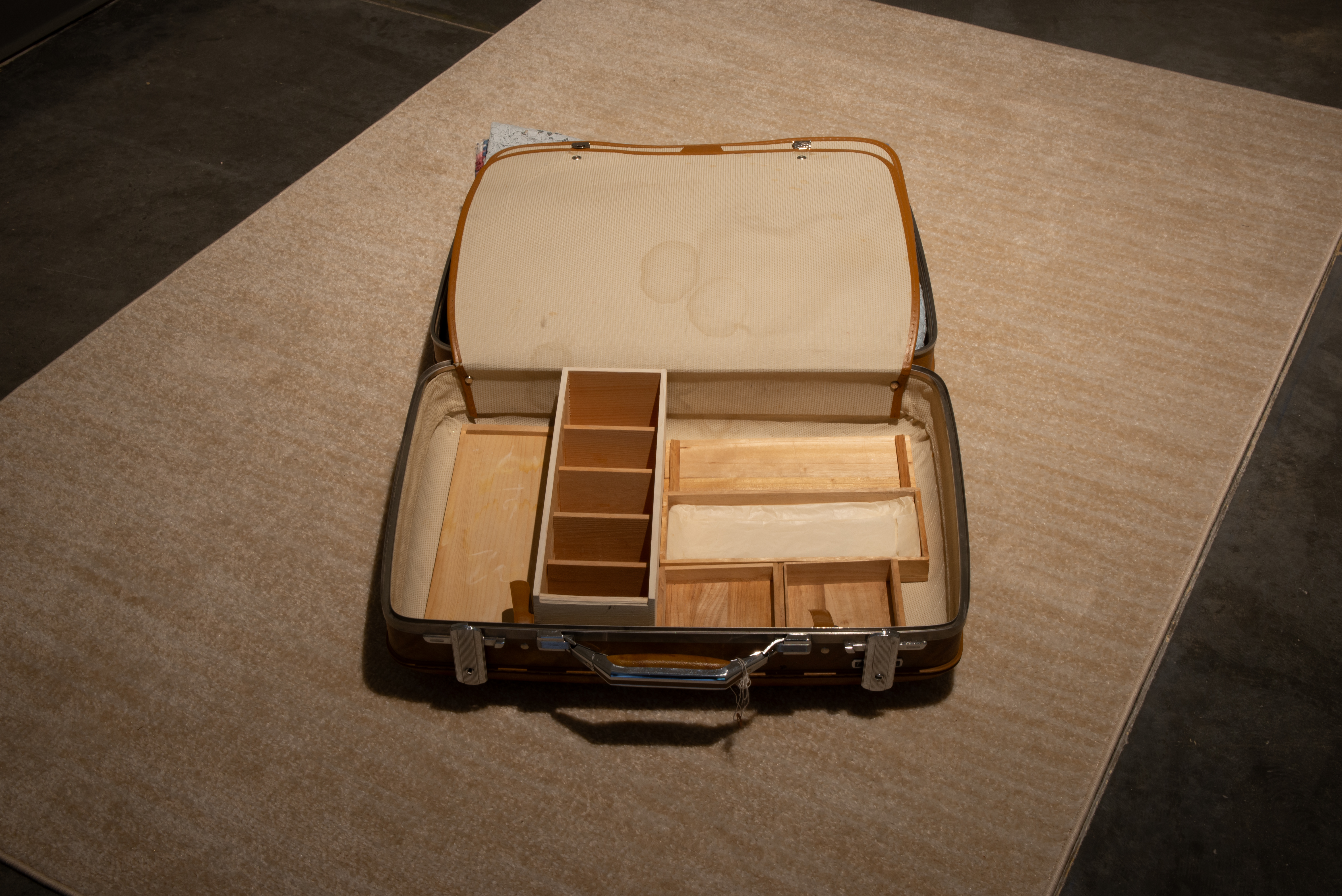
Mama, 2024, found objects and audio, 30 minutes, 6“ x 6’ x 4’. Photo credit: Carrie Quinney
According to superstitions passed down to me, your name defines your personality and is your destiny. My great-grandmothers of Japanese descent were both born in America in the 1910s. One was born in Little Tokyo in Los Angeles, California and the other in Ninole, Hawaii. They were Nisei, second-generation Japanese Americans, the bridge between American culture and their immigrant Japanese parents. Both of their lives changed when they moved to Japan in the 1920s. They needed to learn how to be Japanese in imperialist Japan, when Japanese culture was its most rigid and unforgiving. In my interviews with my grandparents I learned that my great-grandmothers hid their ability to speak English. Therefore, they did not teach their children English. Later, those children (my grandparents) would conceal the Japanese language from my mother so she could speak English without an accent. This narrative is present in my audio work Mama. The work consists of paulownia wood boxes in a suitcase and the audio from interviews with my grandparents. The voids of the traditional wooden boxes would have held objects such as tea bowls that are no longer present. Small in presence and laid on the floor, the work quietly asks the audience to be seen and heard. The suitcase appears as if it was found in the back of a closet in a family home. The specificity of the hard shell case points at the era it would have been used to travel with. Voices are muffled within the suitcase, requiring the viewer to move closer in order to understand them.
In the audio of Mama, the interviews touch upon topics such as matrilineal relationships, language, and survival. It is revealed that my great-grandmother would whisper “mama” in English to her mother to avoid scrutiny in imperialist Japan. My great-grandmothers had to hide their American-ness during the war. At the same time in America, Japanese Americans hid, burned, and buried their Japanese-ness in an attempt to avoid persecution.
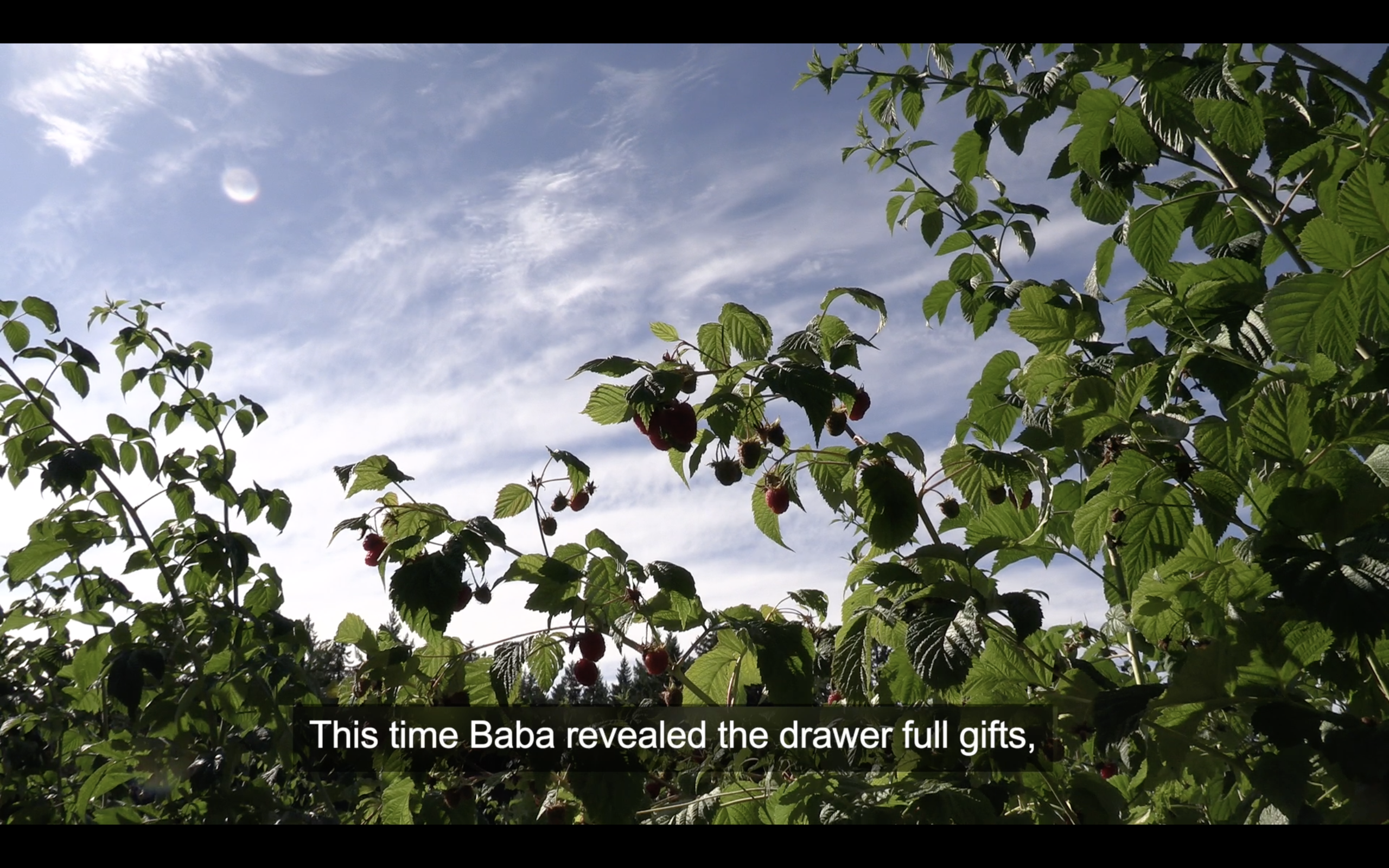


The Burning of Gifted Sakura, 2024, video, 8 minutes and 6 seconds
I filmed The Burning of Gifted Sakura at Bainbridge Island and Minidoka National Historic Site, locations tied to the removal of Japanese Americans. This included the Bainbridge Island Japanese Exclusion Memorial and Suyematsu Farms. At these sites, I searched for witnesses and remnants of history through foliage and structures. I continued this search with my pilgrimage to Minidoka. Just like the boxes of gifts in my narrative of The Burning of Gifted Sakura, I have wanted to and yet avoided visiting Minidoka despite it being so close to where I live. There has always been an excuse: it's too emotional, not the right time, and not connected to me enough. It points to the conflict within myself, of being of Japanese descent yet having the shame of an American. Of being a descendant of the victim and the perpetrator. Of being Japanese American, and yet not sharing this tragedy shared by a large majority of the community. I expand my understanding of history to include the alternative of complex reversals. Thus the camps are an alternate reality, the haunting I could have inherited.
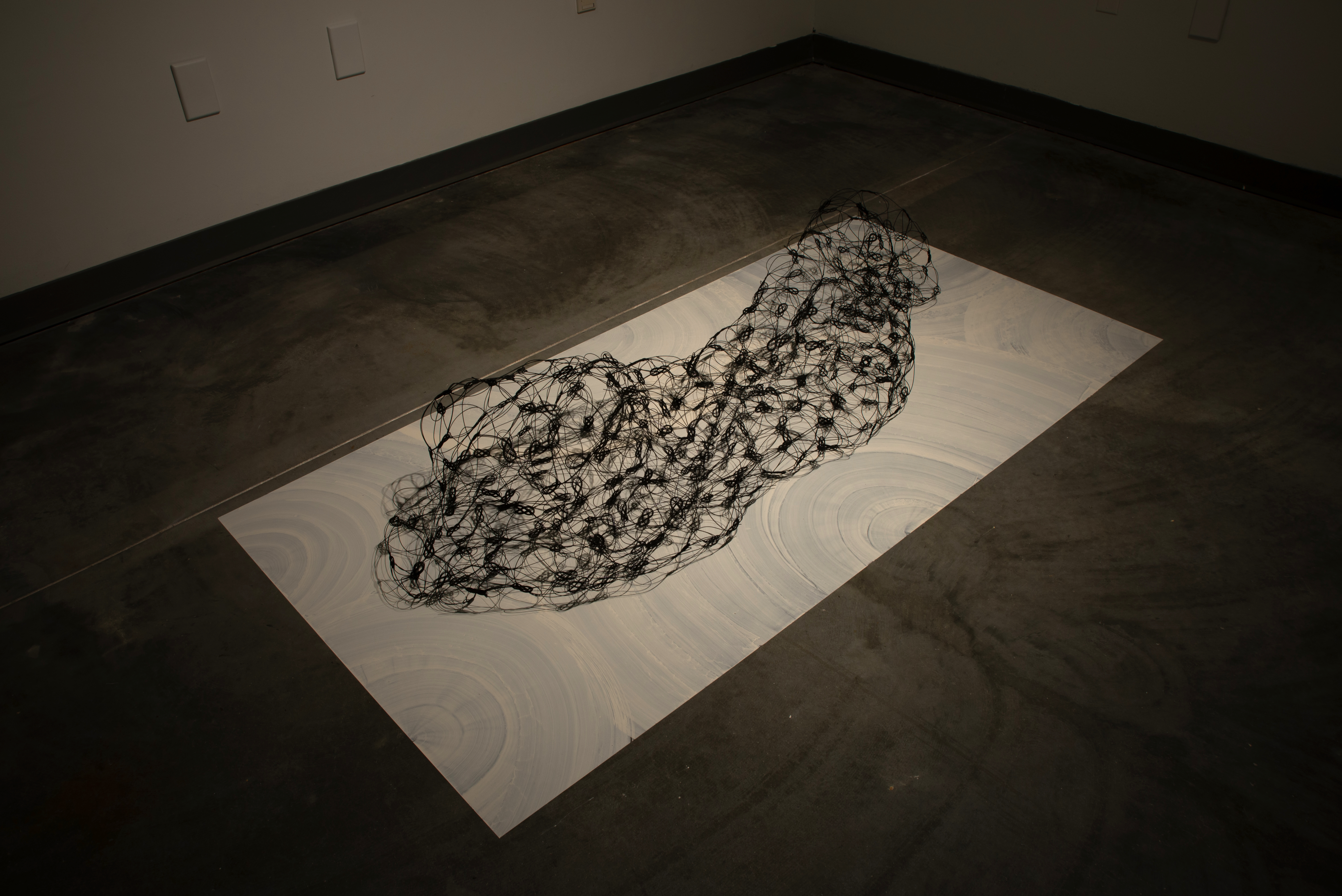


All That Remains, 2024, silk mizuhiki cords on porcelain slip, 1’ x 8’ x 3’. Photo credit: Carrie Quinney
All that Remains lays to rest this ancestral ghost of my great grandfather. The form was made to the dimensions of my body, representing the atomized shadow of my great-grandfather within me. It lays upon unfired white ceramic slip that represents the unknown earth my great-grandfather died upon.